Probably Stolen Winemaking Guide: Berries, Water and Yeast
Make Bloomberry wine with the right bottle, 750 ml of water and yeast, then compare fermentation time, ingredients and finished quality.
What goes into a wine bottle?
The official store screenshot of the Bloomberry Wine Fermenting Guide shows 750 ml of water, one or two berries and optional yeast. A wine bottle is the container for that process. Keep bottles intended for production separate from ordinary stock so they remain available when ingredients arrive.
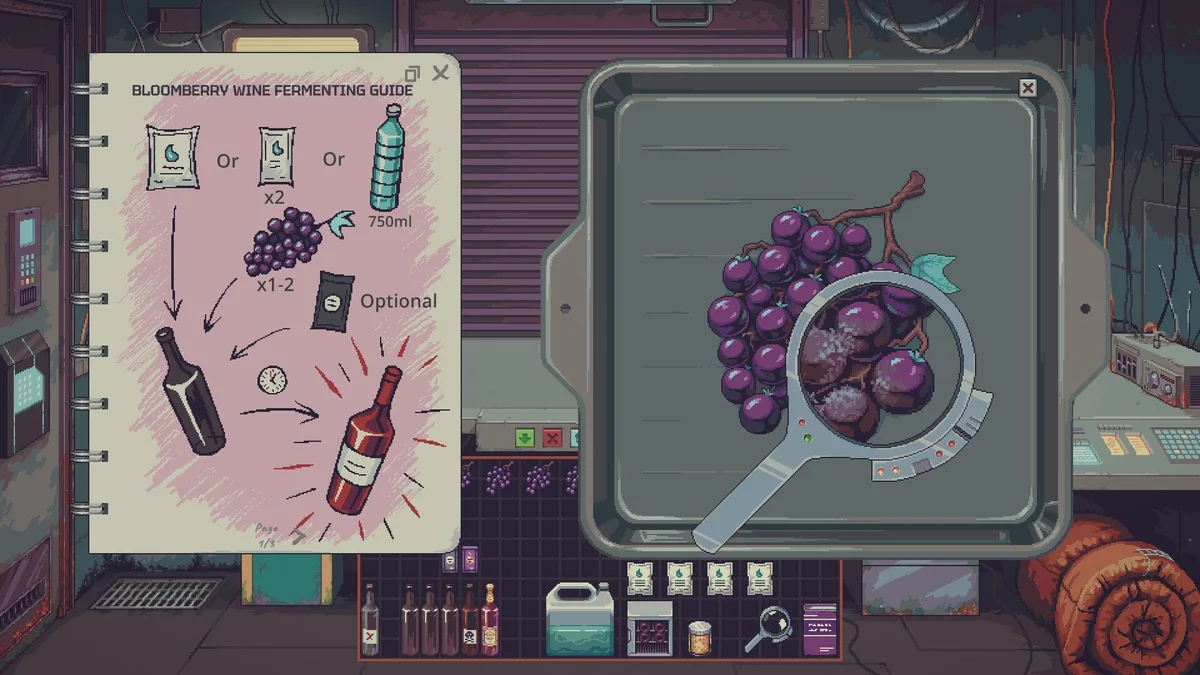
Start a small batch first. It is easier to learn what a good bottle looks like when you can follow one set of ingredients from inspection to sale.
How long does fermentation take?
Fermentation time depends on the yeast:
| Setup | Fermentation time |
|---|---|
| No yeast | 4 days |
| Ordinary yeast | 2 days |
| Super Yeast | 1 day |
These timings cover ordinary Bloomberry wine. Berry condition, water and yeast also affect the result, so speed alone is not a quality rating. Do not commit every bottle to the quickest process without inspecting the finished product.
Which ingredients deserve the most attention?
Inspect the berries before starting. The store’s manual image places the magnifying glass and berry condition beside the fermentation instructions for a reason. Keep usable water ready rather than filling a bottle with whichever liquid is closest.
Higher-grade water improves ordinary wine quality. Synthetic Yeast produces the separate Gloomberry result. Keep those ingredients clearly separated if you are trying to build an ordinary wine business.
For managing the liquid supply, use the water guide and purity calculator. The calculator models the liquid you enter; it does not rate berries or predict a wine’s final label.
How do quality and aging change the value?
Fermentation speed does not set the selling price. Fresh wine starts at 100 base credits. Homebrew keeps that value, while Production Wine’s grade and retail modifiers lift its displayed estimate to 144 on Mark Up. Homebrew’s base value rises by 3 credits per day of age: 100 when finished, 103 at age one, 106 at age two and 118 at age six. These launch bottle values are before the final negotiated sale.
For Homebrew, use base value = 100 + 3 × age in days. An AgeWell adds an extra day of age per cycle. Match the bottle’s grade and trading labels when comparing offers; an estimate of 144 is not a universal wine price.
In Steam build 26284217, wine grades apply the following multipliers. Applied to a fresh bottle’s 100-credit base, they give the following values before trading modifiers:
| Finished grade | Unaged value after grade modifier | Grade modifier |
|---|---|---|
| Undrinkable | 0 credits | −100% |
| Bucket Brew | 85 credits | −15% |
| Homebrew | 100 credits | 0% |
| Production Wine | 125 credits | +25% |
| Reserve | 150 credits | +50% |
| Master Vintage | 175 credits | +75% |
Use grade-adjusted value = round((100 + 3 × age) × grade multiplier), then apply trading modifiers. Round to the nearest integer; at an exact half-credit tie, choose the nearest even integer: 227.5 becomes 228. Do not add the empty bottle price again. The 85–175 range describes drinkable, unaged bottles; it is not a cap on aged wine. Choose the multiplier from the finished label rather than assigning a price to the yeast type.
When should you expand wine production?
Expand after a complete batch reaches a buyer and you understand the cash tied up in the waiting period. Several bottles fermenting at once still occupy space and represent money you cannot spend on rent today.
The recipe table includes the fermentation variants without assigning one universal selling price. Keep a record of your accepted offers if you want to compare wine with your other production line. The money guide explains how to separate equipment costs from ongoing batch costs.
Related Articles
guides
Probably Stolen Aquafarming Guide: Tanks, Fish and Water
Start aquafarming in Probably Stolen, maintain tank circulation and water quality, breed fish and understand tilapia, eels and sturgeons.
guides
Probably Stolen Beginner Guide: Your First Shop
Start Probably Stolen with the right scenario, inspect stock, plan rent and build a production line without tying up all your cash.
guides
Probably Stolen Factions and Reputation Guide
Understand the six faction reputation tracks, trading relationships and the risks of treating every customer as an ordinary sale.
Was this helpful?
Thanks for the feedback!